Skip to content
The Kids Research Institute Australia logo
Donate

No results yet

Search

Research

Attitudes, perceptions, and experiences of Western Australians towards vaccine safety surveillance systems following COVID-19 vaccines: A qualitative descriptive study

Concerns regarding adverse events following immunisation are a barrier to vaccine uptake. Health professionals use vaccine safety surveillance systems (VSSSs) to monitor vaccines and inform the public of safety data. With little known about public attitudes, perceptions, and experiences with VSSS, we examined them in the context of COVID-19 vaccinations in Western Australia.

Research

Skin-Microbiome Assembly in Preterm Infants during the First Three Weeks of Life and Impact of Topical Coconut Oil Application

The structure and function of infant skin is not fully developed until 34 weeks of gestation, and this immaturity is associated with risk of late-onset sepsis (LOS). Topical coconut oil improves preterm-infant skin integrity and may reduce LOS. However, data on early-life skin-microbiome succession and potential effects of emollient skin care in preterm infants are scarce.

Research

Effects of ganaxolone on non-seizure outcomes in CDKL5 Deficiency Disorder: Double-blind placebo-controlled randomized trial

CDKL5 deficiency disorder (CDD) is a rare developmental and epileptic encephalopathy. Ganaxolone, a neuroactive steroid, reduces the frequency of major motor seizures in children with CDD. This analysis explored the effect of ganaxolone on non-seizure outcomes. 

Research

Respiratory syncytial virus in children: epidemiology and clinical impact post-COVID-19

Respiratory syncytial virus (RSV) remains a leading cause of mortality and morbidity worldwide. RSV seasonality was disrupted by COVID-19-associated nonpharmaceutical interventions (NPIs). We review RSV seasonality, molecular epidemiology, clinical manifestations, and community awareness to inform future prevention strategies.

Research

Co-design of the neurodevelopment assessment scale

Neurodevelopmental disorders (NDDs) have high comorbidity rates and shared etiology. Nevertheless, NDD assessment is diagnosis-driven and focuses on symptom profiles of individual disorders, which hinders diagnosis and treatment. There is also no evidence-based, standardized transdiagnostic approach currently available to provide a full clinical picture of individuals with NDDs. The pressing need for transdiagnostic assessment led to the development of the Neurodevelopment Assessment Scale.

Research

Invasive aspergillosis in adult patients in Australia and New Zealand: 2017–2020

New and emerging risks for invasive aspergillosis (IA) bring the need for contemporary analyses of the epidemiology and outcomes of IA, in order to improve clinical practice.

Research

Do parent-reported early indicators predict later developmental language disorder? A Raine Study investigation

Developmental language disorder (DLD) is one of the most common neurodevelopmental conditions. Due to variable rates of language growth in children under 5 years, the early identification of children with DLD is challenging. Early indicators are often outlined by speech pathology regulatory bodies and other developmental services as evidence to empower caregivers in the early identification of DLD.

Research

Increase in invasive group A streptococcal disease among Australian children coinciding with northern hemisphere surges

Increases in invasive group A streptococcal disease (iGAS) have recently been reported in multiple countries in the northern hemisphere, occurring during, and outside of, typical spring peaks. We report the epidemiology of iGAS among children in Australia from 1 July 2018 to 31 December 2022.

Research

Investigating the impact of developmental coordination difficulties across home, school, and community settings: Findings from the Australian Impact for DCD survey

To evaluate the participation difficulties experienced by children with developmental coordination disorder in home, school, and community environments.  

Research

Incremental effectiveness of 23-valent pneumococcal polysaccharide vaccine against pneumonia hospitalisation among Australian Indigenous children: A record linkage study

The impact of pneumococcal conjugate vaccines (PCVs) on pneumonia in children is well-documented but data on 23-valent pneumococcal polysaccharide vaccine (PPV23) are lacking. Between 2001 and 2011, Indigenous children in Western Australia (WA) were recommended to receive PPV23 at 18-24 months of age following 3 doses of 7-valent PCV. We evaluated the incremental effectiveness of PPV23 against pneumonia hospitalisation.

Research

Psychosocial wellbeing, parental concerns, and familial impact of children with developmental coordination disorder

Developmental Coordination Disorder (DCD) is a neurodevelopmental condition impacting motor skill acquisition and competence. While previous studies have identified adverse psychosocial outcomes in DCD, they are limited by small or population-screened, community-based samples.

Research

Nirsevimab binding-site conservation in respiratory syncytial virus fusion glycoprotein worldwide between 1956 and 2021: an analysis of observational study sequencing data

Nirsevimab is an extended half-life monoclonal antibody to the respiratory syncytial virus (RSV) fusion protein that has been developed to protect infants for an entire RSV season. Previous studies have shown that the nirsevimab binding site is highly conserved. However, investigations of the geotemporal evolution of potential escape variants in recent (ie, 2015–2021) RSV seasons have been minimal.

Research

The impact for DCD – USA study: The current state of Developmental Coordination Disorder (DCD) in the United States of America

Developmental Coordination Disorder (DCD) is among the most under-recognized and under-supported disorders worldwide. The aim of this study was to present a preliminary national study that evaluated the unmet needs of children with DCD in the USA using the Impact for DCD survey.

Research

Early motor function of children with autism spectrum disorder: A systematic review

Early motor impairments have been reported in children with neurodevelopmental disorders (NDD), but it is not clear if early detection of motor impairments can identify children at risk for NDD or how early such impairments might be detected. Our aim was to characterize early motor function in children later diagnosed with NDD relative to typically developing children or normative data.

Research

Investigating the Feasibility and Acceptability of a Facebook Delivered, Parent Mediated, Physical Activity Intervention for Children with Developmental Coordination Disorder

Children with Developmental Coordination Disorder (DCD) experience difficulties performing fundamental movement skills, resulting in reduced physical activity (PA). Given low PA can impact mental and physical health, improving PA in DCD appears imperative. This study investigates the feasibility of a Facebook delivered, parent mediated, PA intervention for children with DCD.

Research

Diagnostic services for developmental coordination disorder: Gaps and opportunities identified by parents

Affecting one in 20 children, Developmental Coordination Disorder (DCD) is a common neurodevelopmental disorder impacting a child's ability to learn motor skills. Despite its high prevalence, DCD is under-recognized and under-diagnosed, causing unnecessary frustration and stress for families who are seeking help for their child. This study aimed to understand how parents procure diagnostic services and their perspectives on needed supports and services to improve early identification and diagnosis of DCD. 

News & Events

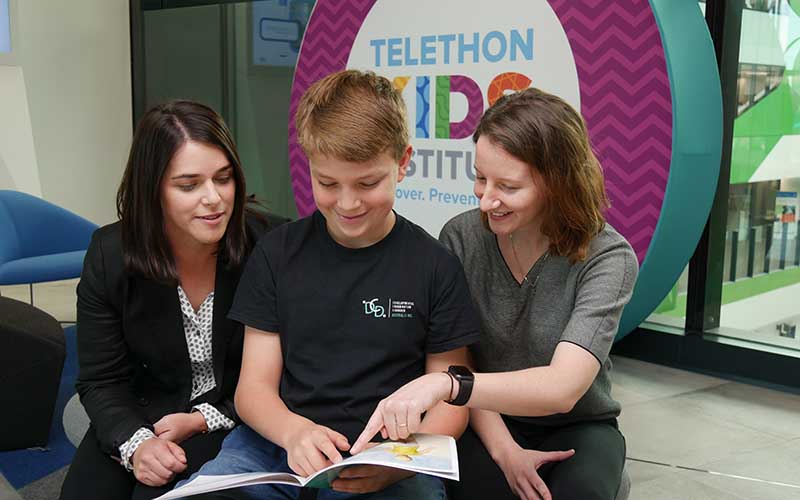
New book gives voice to kids with DCD

Two The Kids Research Institute Australia researchers behind a new book featuring the voices of Kids with DCD.