
Search
Latest news & events at the Wesfarmers Centre of Vaccines & Infectious Diseases.
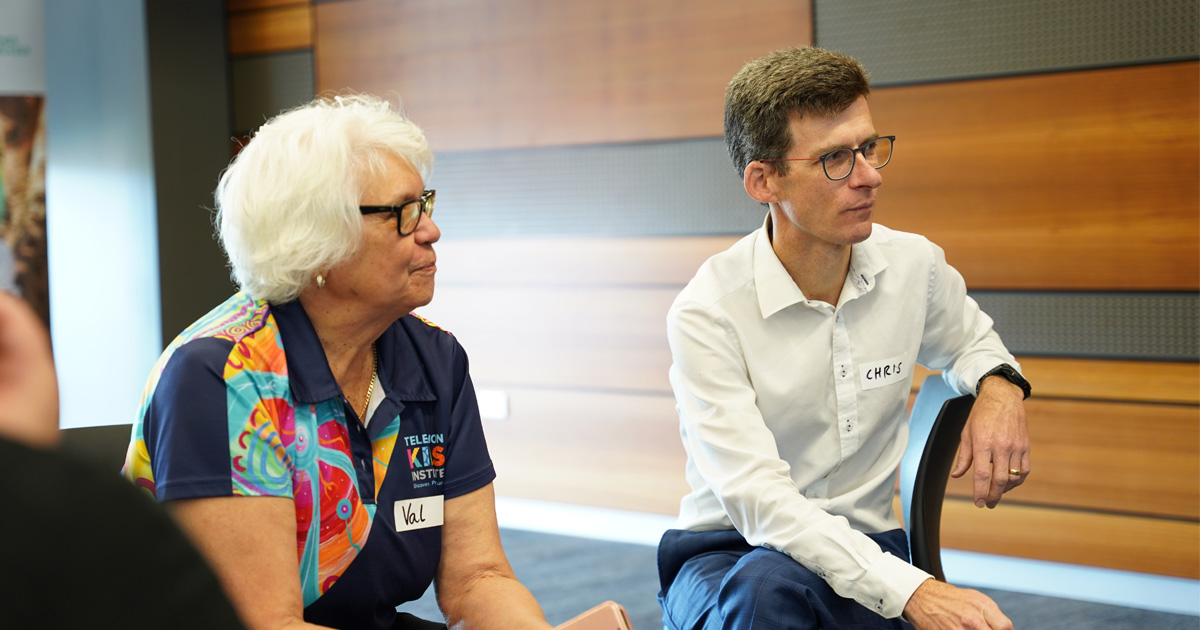
Researchers from the Wesfarmers Centre of Vaccines and Infectious Diseases at The Kids Research Institute Australia have shared their expertise with the community in Cockburn, covering topics ranging from respiratory disease in babies to recurring ear infections in kids.

Enrolments for Australia’s first needle-free, gene-based COVID-19 vaccine study – to be led in WA by The Kids Research Institute Australia – are open.
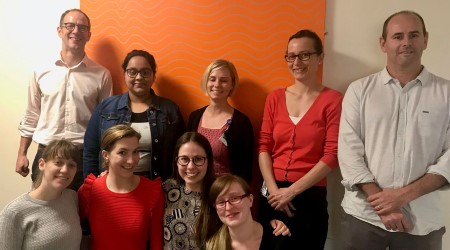
Clinical Professor Tobias Strunk, Dr Andrew Currie and their Neonatal Infection and Immunity Team have become the newest members of the Wesfarmers Centre of Vaccines and Infectious Diseases.
V114 (15-valent pneumococcal conjugate vaccine [PCV]) contains all serotypes in 13-valent PCV (PCV13) and additional serotypes 22F and 33F. This study evaluated safety and immunogenicity of V114 compared with PCV13 in healthy infants, and concomitant administration with DTPa-HBV-IPV/Hib and rotavirus RV1 vaccines.
The current framework for testing and regulating vaccines was established before the realization that vaccines, in addition to their effect against the vaccine-specific disease, may also have "non-specific effects" affecting the risk of unrelated diseases. Accumulating evidence from epidemiological studies shows that vaccines in some situations can affect all-cause mortality and morbidity in ways that are not explained by the prevention of the vaccine-targeted disease.
Histo-blood group antigens (HBGAs) may influence immune responses to rotavirus vaccination.
This phase III study evaluated safety, tolerability, and immunogenicity of V114 (15-valent pneumococcal conjugate vaccine) in healthy infants. V114 contains all 13 serotypes in PCV13 and additional serotypes 22F and 33F.
The prevalence of scar formation following Bacille Calmette-Guérin (BCG) vaccination varies globally. The beneficial off-target effects of BCG are proposed to be stronger amongst children who develop a BCG scar. Within an international randomised trial ('BCG vaccination to reduce the impact of coronavirus disease 2019 (COVID-19) in healthcare workers'; BRACE Trial), this nested prospective cohort study assessed the prevalence of and factors influencing scar formation, as well as participant perception of BCG scarring 12 months following vaccination.
Preterm birth (PTB) and stillbirth remain two of the most important causes of death, morbidity, and disability in childhood. Despite efforts to reduce PTB and stillbirth worldwide, rates of these adverse outcomes remain persistently elevated, independent of income setting. There is an urgent need for more effective interventions to reduce associated neonatal and early childhood morbidity and mortality.