Skip to content
The Kids Research Institute Australia logo
Donate

Search

News & Events

Bold bid to end rheumatic heart disease

Some of the nation’s leading medical researchers will converge on Darwin this week to step out a plan to wipe out rheumatic heart disease.

Research

ACE2 expression is elevated in airway epithelial cells from older and male healthy individuals but reduced in asthma

COVID-19 is complicated by acute lung injury, and death in some individuals. It is caused by SARS-CoV-2 that requires the ACE2 receptor and serine proteases to enter AEC. We determined what factors are associated with ACE2 expression particularly in patients with asthma and COPD. We obtained lower AEC from 145 people from two independent cohorts, aged 2-89 years, Newcastle (n = 115) and Perth (n = 30), Australia. The Newcastle cohort was enriched with people with asthma (n = 37) and COPD (n = 38). Gene expression for ACE2 and other genes potentially associated with SARS-CoV-2 cell entry was assessed by qPCR, and protein expression was confirmed with immunohistochemistry on endobronchial biopsies and cultured AEC.

Research

COVID-19 monitoring with sparse sampling of sewered and non-sewered wastewater in urban and rural communities

Equitable SARS-CoV-2 surveillance in low-resource communities lacking centralized sewers is critical as wastewater-based epidemiology (WBE) progresses. However, large-scale studies on SARS-CoV-2 detection in wastewater from low-and middle-income countries is limited because of economic and technical reasons.

Research

Airway macrophages display decreased expression of receptors mediating and regulating scavenging in early cystic fibrosis lung disease

Cystic fibrosis (CF) airway disease is characterized by chronic inflammation, featuring neutrophil influx to the lumen. Airway macrophages (AMs) can promote both inflammation and resolution, and are thus critical to maintaining and restoring homeostasis. CF AM functions, specifically scavenging activity and resolution of inflammation, have been shown to be impaired, yet underlying processes remain unknown.

Research

Defining the pediatric response to SARS-CoV-2 variants

The global population has been severely affected by the coronavirus disease 2019 (COVID-19) pandemic, however, with older age identified as a risk factor, children have been underprioritized. This article discusses the factors contributing to the less severe response observed in children following infection with severe acute respiratory syndrome coronavirus 2 (SARS-CoV-2), including, differing viral entry receptor expression and immune responses.

Research

Respiratory Health Effects of In Vivo Sub-Chronic Diesel and Biodiesel Exhaust Exposure

Biodiesel, which can be made from a variety of natural oils, is currently promoted as a sustainable, healthier replacement for commercial mineral diesel despite little experimental data supporting this. The aim of our research was to investigate the health impacts of exposure to exhaust generated by the combustion of diesel and two different biodiesels.

Research

Airway and parenchyma transcriptomics in a house dust mite model of experimental asthma

Lung transcriptomics studies in asthma have provided valuable information in the whole lung context, however, deciphering the individual contributions of the airway and parenchyma in disease pathogenesis may expedite the development of novel targeted treatment strategies. In this study, we performed transcriptomics on the airway and parenchyma using a house dust mite (HDM)-induced model of experimental asthma that replicates key features of the human disease.

Research

Complete Genome Sequences of Four Pseudomonas aeruginosa Bacteriophages: Kara-mokiny 8, Kara-mokiny 13, Kara-mokiny 16, and Boorn-mokiny 1

Pseudomonas aeruginosa is an opportunistic pathogen. Here, we report the isolation of four bacteriophages from wastewater. All four bacteriophages belong to the Myoviridae family.

News & Events

Partnering with communities to reduce rheumatic heart disease in the Kimberley

The Kimberley has the highest rates of rheumatic heart disease (RHD) in Western Australia – but through the establishment of a new community-led, research-backed project known as END RHD Communities, there’s hope this will change.
Research

Complete Genomes of Three Pseudomonas aeruginosa Bacteriophages, Kara-mokiny 1, Kara-mokiny 2, and Kara-mokiny 3

Here, we present the complete genome sequence of Pseudomonas aeruginosa phages Kara-mokiny 1, Kara-mokiny 2, and Kara-mokiny 3. These phages have lytic capabilities against P. aeruginosa and belong to the myovirus morphotype. The genomes of Kara-mokiny 1 and Kara-mokiny 2 are 67,075 bp while that of Kara-mokiny 3 is 66,019 bp long.

Research

Bacteriophage: A new therapeutic player to combat neutrophilic inflammation in chronic airway diseases

Persistent respiratory bacterial infections are a clinical burden in several chronic inflammatory airway diseases and are often associated with neutrophil infiltration into the lungs. Following recruitment, dysregulated neutrophil effector functions such as increased granule release and formation of neutrophil extracellular traps (NETs) result in damage to airway tissue, contributing to the progression of lung disease.

Research

Genome Sequence of a Lytic Staphylococcus aureus Bacteriophage Isolated from Breast Milk

We identified a double-stranded DNA (dsDNA) bacteriophage appearing to belong to Herelleviridae, genus Kayvirus. The bacteriophage, Biyabeda-mokiny 1, was isolated from breast milk using a clinical isolate of Staphylococcus aureus.

News & Events

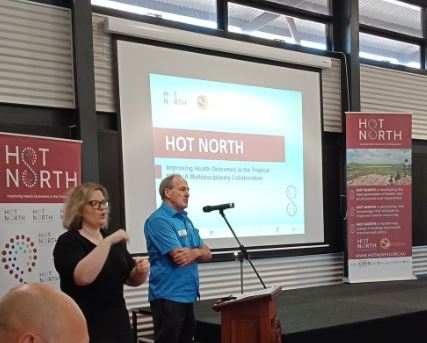
Expert researchers converge on Broome to tackle health challenges in Northern Australia

Over 100 researchers and health professionals from around Australia have united in Broome this week to address the major health battles facing people living in the tropical north of the country.
News & Events

First week of school visits mark official launch of the SToP Trial

The The Kids Skin Health team has a busy six weeks ahead - visiting nine communities throughout the Kimberley region of WA as part of the first school surveillance activities for the SToP Trial.