
Search

Rheumatic heart disease (RHD) is the most important cause of acquired cardiovascular disease in children and young adults and the most common cause of multivalv
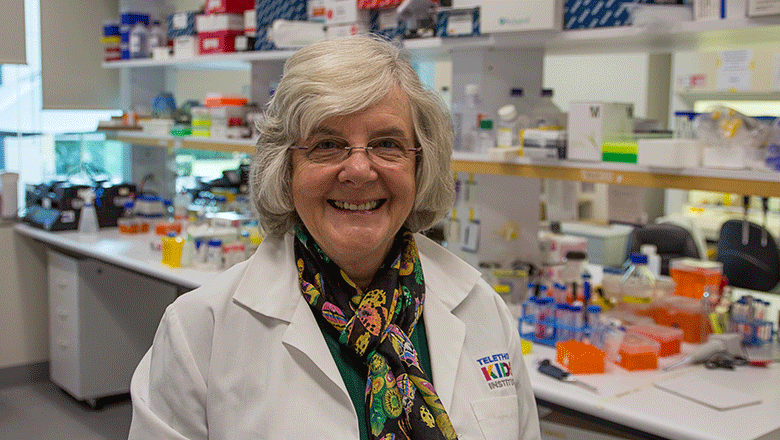
An internationally recognised researcher at The Kids Research Institute Australia has been made a Fellow of the Australian Academy of Science

The Kids Research Institute Australia has welcomed the Federal Government's commitment to legislate the Medical Research Future Fund

The Kids Research Institute Australia is proud to announce the launch of a world class Centre of Research Excellence in rheumatic heart disease (RHD).

Researchers at Perth's The Kids Research Institute Australia have begun a study that could provide new insights into the role of vitamin D in the risk of multiple sclerosis (
The Kids Research Institute Australia have shown that genetic variations that influence BMI and diabetes are similar to those in non-Aboriginal populations.

A study by The Kids Research Institute Australia has found children with Attention Deficit Hyperactivity Disorder (ADHD) have significantly worse school outcomes.
Advances in gene and molecular technology finally explain why brain tumour cells that look the same, behave and respond differently to treatment.
Governments should rethink strategies to prevent whooping cough in newborn infants, including booster vaccination of close contacts of the baby.
TNF mRNA expression was higher in leprosy patients compared to endemic controls, but did not differ significantly between clinical subgroups