
Search
Research has shown that parents of trans children face numerous challenges as they navigate their parenting role, however, little is known about the impact of these challenges on parents’ psychological wellbeing.
Natural Language Sampling (NLS) offers clear potential for communication and language assessment, where other data might be difficult to interpret. We leveraged existing primary data for 18-month-olds showing early signs of autism, to examine the reliability and concurrent construct validity of NLS-derived measures coded from video-of child language, parent linguistic input, and dyadic balance of communicative interaction-against standardised assessment scores. Using Systematic Analysis of Language Transcripts (SALT) software and coding conventions, masked coders achieved good-to-excellent inter-rater agreement across all measures.
Family carers of youth recovering from early psychosis experience significant stress; however, access to effective family interventions is poor. Digital interventions provide a promising solution.
Dissociative symptoms are linked to experiences of trauma, often originating in childhood and adolescence. Dissociative disorders are associated with a high burden of illness and a poor quality of life. Despite evidence suggesting that early intervention can improve outcomes, little research exists on the treatment of dissociative disorders in childhood and adolescence.
Clinical trials suggest that long-chain omega-3 polyunsaturated fatty acids (n-3 PUFAs) (fish oil) may reduce depressive symptoms in adults with major depressive disorder. Therefore, n-3 PUFAs may be a potential treatment for depression in youth.
Aboriginal young people are experts in their own experience and are best placed to identify the solutions to their mental health and wellbeing needs. Given that Aboriginal young people experience high rates of mental health concerns and are less likely than non-Indigenous young people to access mental health services, co-design and evaluation of appropriate mental health care is a priority.
Young people are more likely to be affected by suicide contagion, and there are concerns about the role social media plays in the development and maintenance of suicide clusters or in facilitating imitative suicidal behavior. However, social media also presents an opportunity to provide real-time and age-appropriate suicide prevention information, which could be an important component of suicide postvention activities.
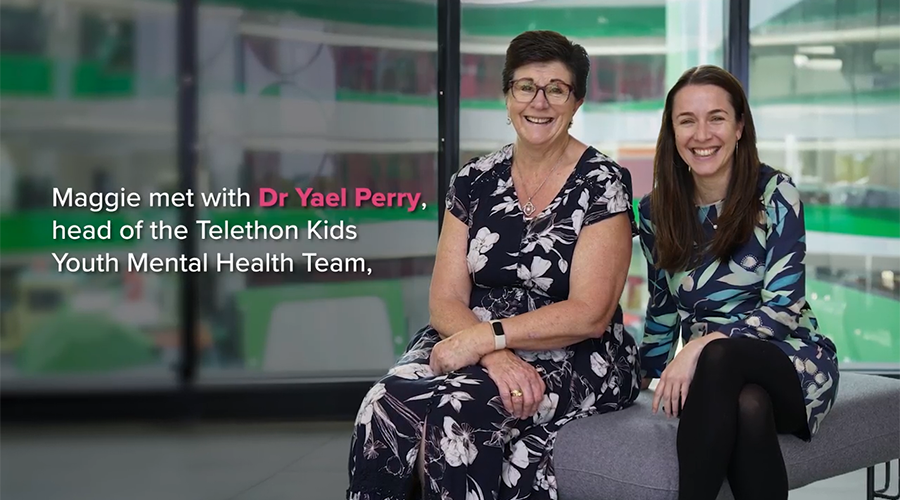
We were delighted to have Australia’s best-known parenting author, Maggie Dent, back at The Kids Research Institute Australia this week, to talk about the mental health of our teenagers.

Congratulations to Head of Youth Mental Health at The Kids Research Institute Australia, Dr Yael Perry, who has received a Telstra Health 2023 Brilliant Women in Digital Health Award in recognition of her innovative use of technology to achieve positive mental health outcomes for marginalised young people.

Communities with poor access to mental health services are eight times more likely to be youth suicide hotspots, according to new The Kids Research Institute Australia research.