
Search
Cancer Council WA has awarded a Post-Doctoral Fellowship to Dr Ben Wylie, for his project to help kids with sarcoma.
One of The Kids Research Institute Australia’s leading young researchers will travel to the world’s premier conference on childhood brain cancer.
New research by The Kids shows donor immune cells are highly effective at boosting the body’s response against leukaemia.
Researchers at The Kids Research Institute Australia have been awarded $4.6 million in national funding from the National Health and Medical Research Council (NHMRC) and Medical Research Future Fund (MRFF) to help support child health research.
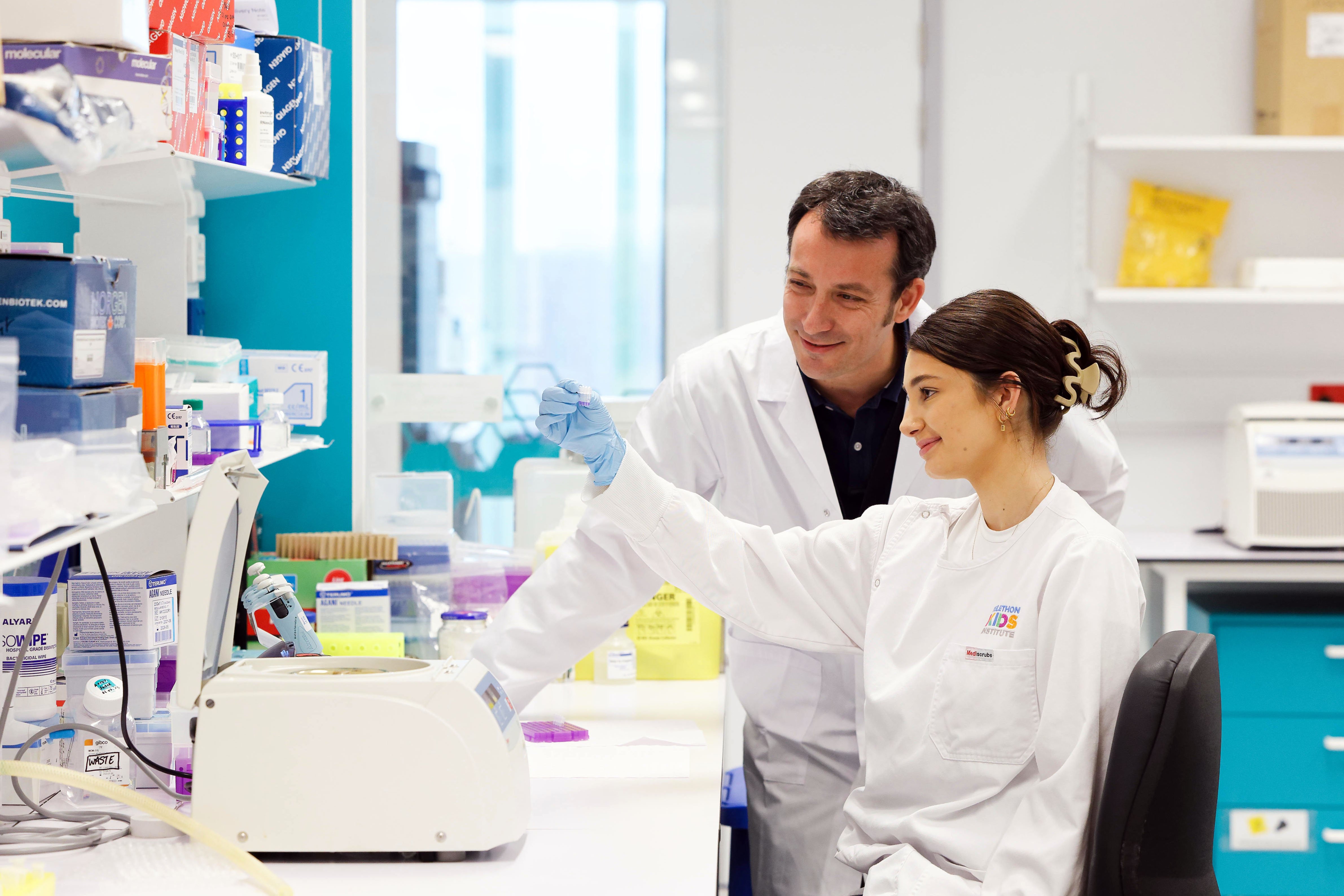
Join us as WA’s cancer research community comes together at the inaugural West Coast Cancer Meeting.
Each year, approximately 1000 children in Australia and New Zealand, aged 0–14 years, are diagnosed with cancer. Despite paediatric cancer accounting for less than 1% of all cancer cases, the impact on their families and communities is profound and disproportionate.
DNA methylation array profiling for classifying pediatric central nervous system (CNS) tumors is a valuable adjunct to histopathology. However, unbiased prospective and interlaboratory validation studies have been lacking. The AIM BRAIN diagnostic trial involving 11 pediatric cancer centers in Australia and New Zealand.
Children with Down syndrome (DS, trisomy 21) are at a significantly higher risk of developing acute leukemia compared to the overall population. Many studies investigating the link between trisomy 21 and leukemia initiation and progression have been conducted over the last two decades.
In this Commentary article, as part of the 100-year celebrations of the journal, we reflect on the contribution of articles published in ICB in the field of tumor immunology. A highlight is a series of interviews conducted with three Australian-based ICB authors who have contributed key papers over the years: Rajiv Khanna, Delia Nelson and Ian Frazer.
Advancements in genomic profiling led to the discovery of four major molecular subgroups in medulloblastoma (MB), which have now been incorporated into the World Health Organization classification of central nervous system tumors. The current study aimed to determine the prognostic significance of the MB molecular subgroups among children in Malaysia.