
Search
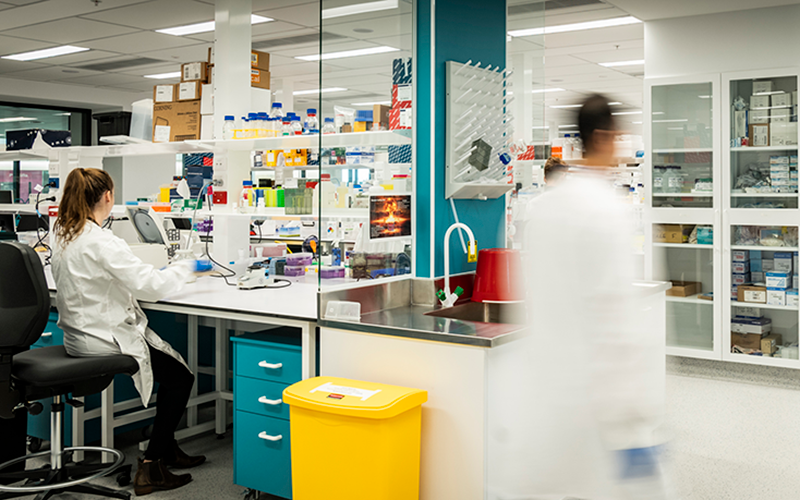
The Kids Research Institute Australia researchers will share in $2.3 million awarded by the Western Australian Department of Health Innovation Seed Fund.
There is controversy regarding whether cystic fibrosis (CF) airway epithelial cells (AECs) are intrinsically proinflammatory.
Deep inspiration and airway physiology: human, canine, porcine, or bovine?

The Airway Epithelial Research Team is investigating the role of the epithelium in the development of airway diseases including asthma, cystic fibrosis and lung transplant rejection.
Wheezing and asthma exacerbations are leading causes of pediatric hospital admissions. Predicting which children will experience persistent exacerbations remains challenging. Prior research has identified immune endotypes in the nasal epithelium of children with acute asthma and wheezing, characterized by varying balances of interferons and inflammatory markers. Notably, children exhibiting low interferon responses coupled with high inflammation are at an increased risk for recurrent respiratory exacerbations.
Heated-tobacco-products (HTPs) are electronic devices that "heat" a processed tobacco/chemical mixture to produce an inhalable emission. They are advertised as a reduced-risk alternative to cigarette smoking. The aim of our research was to assess their potential health impacts using a 3D human airway model.
The impact of smallpox (variola) on Aboriginal communities in Australia beginning in 1789 was catastrophic and continues to cause intergenerational trauma. Historically biased perspectives and contemporary misinformation of the disease's introduction and spread impede modern-day truth-telling and efforts towards reconciliation and national healing.
To explore Aboriginal families' experiences of recognising clinical deterioration and raising their concerns within the Paediatric ESCALATION system to identify enablers and barriers to family involvement.
Plastic pyrolysis oil, which can be produced with similar properties as diesel fuel (plastic diesel), can be used as an alternative to mineral diesel (ULSD) to run a diesel engine. This presents a potential method for recycling waste plastic. Typically plastic diesel is blended with mineral diesel, and oxygenated fuel additives such as ethers added to improve resulting fuel properties.
Bacteriophages (phages) are viruses that selectively kill bacteria and offer a promising option to address the growing global pandemic of antimicrobial-resistant infections. However, phage therapy does not easily align with traditional regulatory pathways designed for fixed-composition chemical drugs or biologics with fixed non-evolving compositions.