Skip to content
The Kids Research Institute Australia logo
Donate

Search

News & Events

News you can use – How you can support your child while you wait for a diagnosis

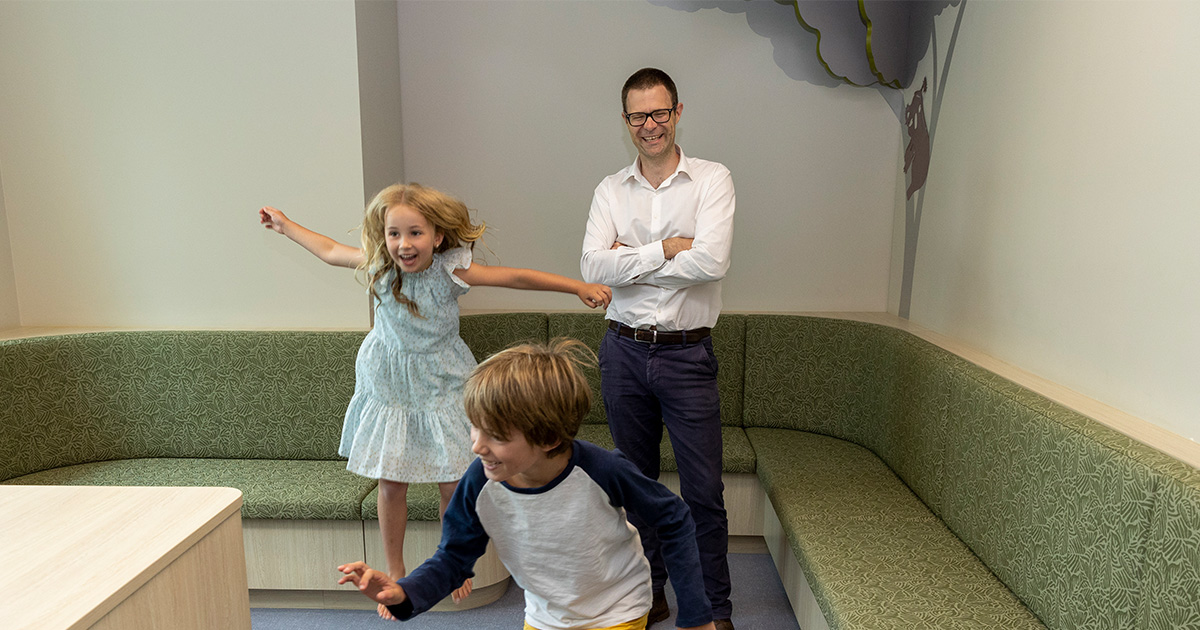
The Kids Research Institute Australia's Professor Andrew Whitehouse and Sarah Pillar share four things families can do to support their child while waiting to receive an ADHD or autism diagnostic assessment.

Research

Neurodivergence, intersectionality, and eating disorders: a lived experience-led narrative review

Autistic people and those with attention deficit hyperactivity disorder are at a high risk of developing an eating disorder. While there is limited evidence on the relationship between other forms of neurodivergence and eating disorders, research suggests associations between giftedness, intellectual disability, obsessive-compulsive disorder, psychosis, Tourette's syndrome, and disordered eating.

Research

Attention Deficit Hyperactivity Disorder

Attention deficit hyperactivity disorder (ADHD) is the most commonly diagnosed childhood mental health disorder, affecting about 1 in 20 children. It can impact their behaviour, learning and social skills.

Research

Age of Diagnosis for Co-occurring Autism and Attention Deficit Hyperactivity Disorder During Childhood and Adolescence: a Systematic Review

Early identification and intervention are recognised as important elements of the clinical pathway for autism spectrum disorder (ASD). Children with ASD and attention deficit hyperactivity disorder (ADHD) may be diagnosed at a different age than children who only have one of these diagnoses.

Research

Unraveling the Optimum Latent Structure of Attention-Deficit/Hyperactivity Disorder: Evidence Supporting ICD and HiTOP Frameworks

Attention Deficit/hyperactivity disorder (ADHD) is conceptualized differently in the Diagnostic and Statistical Manual (DSM-5), the International Classification of Diseases-10 (ICD-10), and the Hierarchical Taxonomy of Psychopathology (HiTOP) frameworks. This study applied independent cluster confirmatory factor analysis (ICM-CFA), exploratory structure equation model with target rotation (ESEM), and the S-1 bi-factor CFA approaches to evaluate seven ADHD models yielded by different combinations of these taxonomic frameworks.

Research

Maternal immune-related conditions during pregnancy may be a risk factor for neuropsychiatric problems in offspring throughout childhood and adolescence

Emerging research suggests that maternal immune activation (MIA) may be associated with an increased risk of adverse neurodevelopmental and mental health outcomes in offspring. Using data from the Raine Study, we investigated whether MIA during pregnancy was associated with increased behavioral and emotional problems in offspring longitudinally across development.

Research

Environmental (Perinatal) risk factors of ADHD in a sibling control design study

Citation: Ibilola O, Silva D. Environmental (Perinatal) risk factors of ADHD in a sibling control design study. Open Access Journal of Behavioural

Research

A genome-wide association study of total child psychiatric problems scores

Substantial genetic correlations have been reported across psychiatric disorders and numerous cross-disorder genetic variants have been detected. To identify the genetic variants underlying general psychopathology in childhood, we performed a genome-wide association study using a total psychiatric problem score.

Research

Parent experiences of their children’s diagnosis with autism, attention deficit hyperactivity disorder, or both conditions

A comparison of parents’ experiences of getting a diagnosis for their child with autism, attention deficit hyperactivity disorder (ADHD) and both diagnoses can inform our understanding of common and unique themes across these neurodevelopmental conditions.

Research

Well-being and Distress in University Students with ADHD Traits: the Mediating Roles of Self-Compassion and Emotion Regulation Difficulties

Tertiary education is particularly demanding for students with attention-deficit hyperactivity disorder (ADHD), who often struggle with emotion regulation and are at greater risk of internalising disorders compared to their peers. Self-compassion is a skill associated with positive mental health and adaptive emotion regulation that might support students in managing the emotional challenges of studying with ADHD.