
Search
This systematic review aimed to summarise existing literature on the impacts of armed conflicts on tuberculosis burden and treatment outcomes.
People having close contact with drug-resistant tuberculosis (DR-TB) patients are at increased risk of contracting and developing the disease. However, no comprehensive review has been undertaken to estimate the burden of DR-TB among contacts of DR-TB patients. Therefore, the current systematic review will quantify the prevalence and incidence of DR-TB among contacts of DR-TB patients.
Malaria is a significant public health concern in the Kingdom of Saudi Arabia (KSA). This study aimed to investigate the spatiotemporal distribution of malaria in the KSA between 2017 and 2021.
HIV, tuberculosis (TB) and malaria are the three most important infectious diseases in Ethiopia, and sub-Saharan Africa. Understanding the spatial codistribution of these diseases is critical for designing geographically targeted and integrated disease control programmes. This study investigated the spatial overlap and drivers of HIV, TB and malaria prevalence in Ethiopia.
Infectious diseases such as tuberculosis (TB), malaria and soil-transmitted helminthiasis continue to impose a significant global health burden and socio-economic impact. Globally, minority indigenous people are disproportionately affected by poverty and are shown to experience a disparate burden of disease and poorer health outcomes than the comparative majority population.
Tuberculosis (TB) is the leading cause of death from a bacterial pathogen worldwide. China has the third highest TB burden in the world, with a high reported burden in Hunan Province (amongst others). This study aimed to investigate the spatial distribution of TB and identify socioeconomic, demographic, and environmental drivers in Hunan Province, China. Numbers of reported cases of TB were obtained from the Tuberculosis Control Institute of Hunan Province, China.
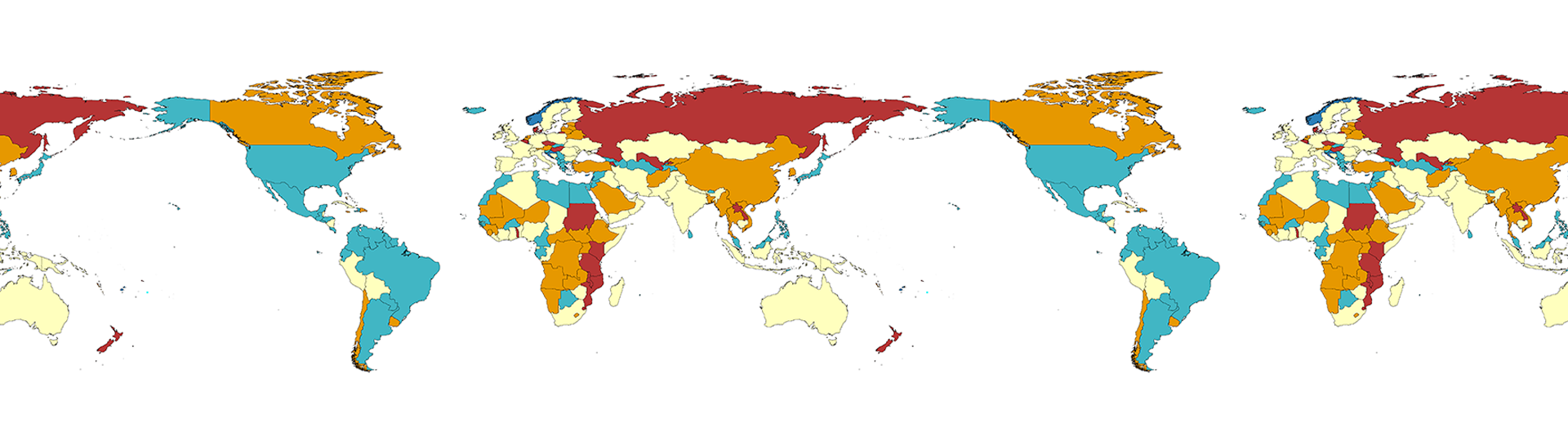
The Geospatial and Tuberculosis (GeoTB) team led by Kefyalew Alene focuses on designing an innovative approach for improving the efficiency and effectiveness of public health interventions to help control and ultimately eliminate tuberculosis in high-burden countries.
No studies have yet examined high-resolution shifts in the spatial patterns of human movement in Australia throughout 2020 and 2021, a period coincident with the repeated enactment and removal of varied governmental restrictions aimed at reducing community transmission of SARS-CoV-2. We compared overlapping timeseries of COVID-19 pandemic-related restrictions, epidemiological data on cases and vaccination rates, and high-resolution human movement data to characterize population-level responses to the pandemic in Australian cities.
Contact investigations with drug-susceptible tuberculosis (DS-TB) patients have demonstrated a high prevalence of tuberculosis infection (TBI). However, the prevalence of TBI among individuals in close contact with drug-resistant tuberculosis (DR-TB) patients is poorly understood. This systematic review and meta-analysis aimed to determine the prevalence of TBI among household and non-household contacts of DR-TB patients.
Multiple lifestyle risk factors exhibit a stronger association with non-communicable diseases (NCDs) compared to a single factor, emphasizing the necessity of considering them collectively. By integrating these major lifestyle risk factors, we can identify individuals with an overall unhealthy lifestyle, which facilitates the provision of targeted interventions for those at significant risk of NCDs. The aim of this study was to evaluate the socio-demographic correlates of unhealthy lifestyles among adolescents and adults in Ethiopia.