
Search
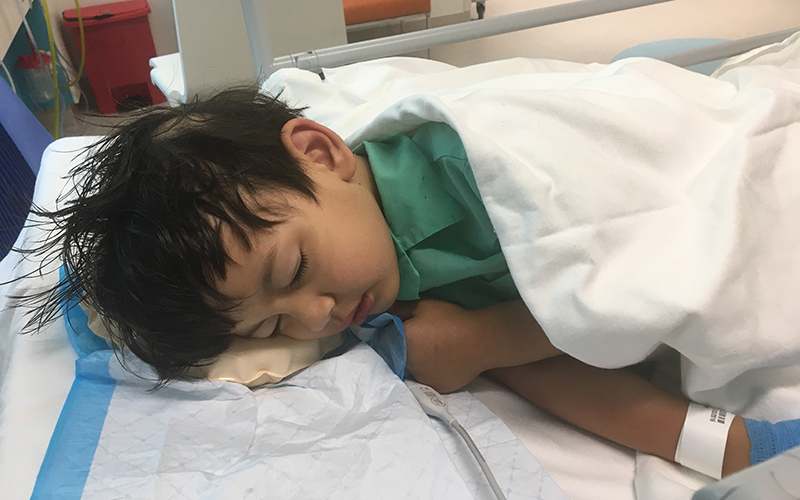
Charlie, 6, has ended up in hospital twice with invasive Strep A infection over his short lifetime – the first time when just three years old.

The urgency for a world-first respiratory syncytial virus vaccine is at an all-time high.
Hannah Peter Moore Richmond OAM BSc (Hons) GradDipClinEpi PhD MBBS MRCP(UK) FRACP Head, Infectious Diseases Research Head, Vaccine Trials Group 08
Australia introduced a hybrid Respiratory Syncytial Virus (RSV) Maternal and Infant Protection Program (RSV-MIPP) in 2025, using National Immunisation Program-funded RSV vaccine for pregnant people from 28 weeks' gestation and jurisdiction-funded nirsevimab. We estimated real-world effectiveness and assessed the impact of the RSV-MIPP program across a participating surveillance network.
Ensitrelvir, a 3C-like protease inhibitor, received emergency approval in Japan in November 2022 for treating non-hospitalized patients with mild-to-moderate COVID-19. However, confirmation of its real-world clinical effectiveness is limited.
The association between early-life respiratory syncytial virus infections and later respiratory morbidity is well established. However, there is limited evidence on factors that influence this risk. We examined sociodemographic and perinatal factors associated with later childhood respiratory morbidity requiring secondary care following exposure to a laboratory-confirmed RSV episode in the first 2 years.
Britta Regli-von Ungern-Sternberg AM FAHMS MD, PhD, DEAA, FANZA Chair of Paediatric anaesthesia, University of Western Australia; Consultant
Respiratory syncytial virus (RSV) remains a leading cause of mortality and morbidity worldwide. RSV seasonality was disrupted by COVID-19-associated nonpharmaceutical interventions (NPIs). We review RSV seasonality, molecular epidemiology, clinical manifestations, and community awareness to inform future prevention strategies.
Nirsevimab is an extended half-life monoclonal antibody to the respiratory syncytial virus (RSV) fusion protein that has been developed to protect infants for an entire RSV season. Previous studies have shown that the nirsevimab binding site is highly conserved. However, investigations of the geotemporal evolution of potential escape variants in recent (ie, 2015–2021) RSV seasons have been minimal.
Seasonal influenza vaccine is effective against influenza hospitalisations, but little is known about non-specific effects of the vaccine on other respiratory pathogens with similar seasonal patterns. We aimed to assess the causal impact of seasonal influenza vaccine on laboratory-confirmed hospitalisations for respiratory syncytial virus (RSV) in children using an instrumental variable strategy.