
Search
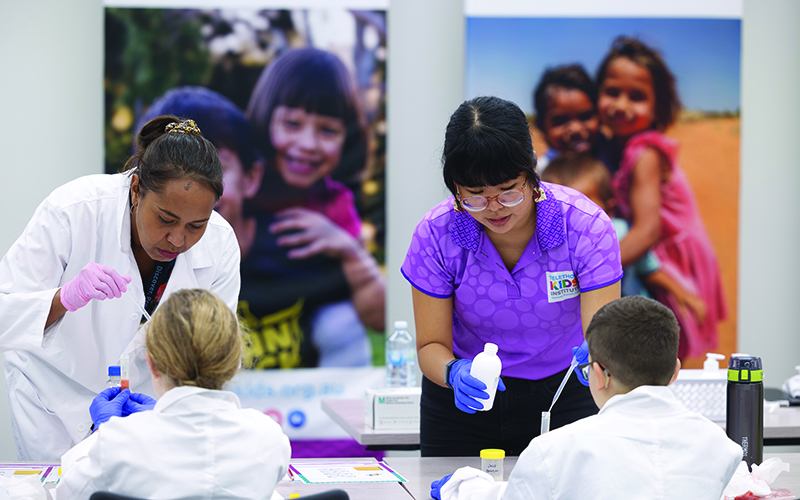
Strawberries, slime and sliced bread are being used as tools to educate and inspire the next generation of researchers, as part of the The Kids Discovery Centre Schools & Outreach Program.

Study found children aged 2–5 years from dog-owning households had increased pro-social behaviours like sharing and cooperating, when compared to children without a dog.
On this Research Impact page, we showcase real game-changers - research that changes the very way other scientists around the world think and approach challenges. The far-reaching impact on children and families for all the stories shown on these pages is both exciting and significant.
Dibothriocephalus nihonkaiensis is a zoonotic tapeworm transmitted to humans through consumption of raw or undercooked fish or wild meat. Between 2022 and 2023, Yamagata Prefecture reported an increase in cases compared with 2017-2021, when none were observed. We conducted a clinical and environmental investigation to clarify infection sources.
Since the first description of bronchopulmonary dysplasia (BPD), multiple definitions to diagnose BPD and its grading have been published. Several studies have compared the predictive performance of these definitions for long-term outcomes. The objective was to identify the BPD definition with the optimal predictive performance for long-term respiratory and neurological outcomes in preterm infants.
Peroxisome proliferator-activated receptor γ (PPARγ) is a prominent ligand-inducible transcription factor involved in adipocyte differentiation, glucose homeostasis, insulin sensitivity, inflammation, and cell proliferation, making it a therapeutic target for diabetes, metabolic syndrome, autoimmune diseases, and cancer.
The Raine Study is a long-running study looking at the health and well-being of a group of Western Australian families for over 35 years. Participants are at the heart of the study, shaping its research direction and communication. While participants have previously contributed to research grant development, they had not been directly involved in setting the Raine Study’s overall research agenda.
Influenza vaccines are important for reducing the burden of influenza, particularly for populations at risk of more severe infections. Obesity is associated with increased influenza severity and therefore individuals with obesity are often specifically recommended for annual influenza vaccination. Obesity is also associated with an altered inflammatory profile, which may influence vaccine responses. This systematic review aimed to evaluate the evidence for any association between obesity and influenza vaccine immunogenicity.
Postnatal intensive care for preterm infants born at 22 to 23 weeks' gestation is increasing, although survival rates remain low. Information on outcomes for multiple countries or regions can be important for research, benchmarking, quality improvement, and parental counseling.
Gram-negative bacterial infections remain a major cause of morbidity and mortality in children and neonates globally, compounded by the rise of antimicrobial resistance. Barriers to paediatric antibiotic licencing lead to reduced availability of potentially effective agents for treatment. For children and neonates in the Oceania region, specific challenges remain including a paucity of surveillance data on local rates of antimicrobial resistance, and lack of availability of newer, more costly agents.