
Search
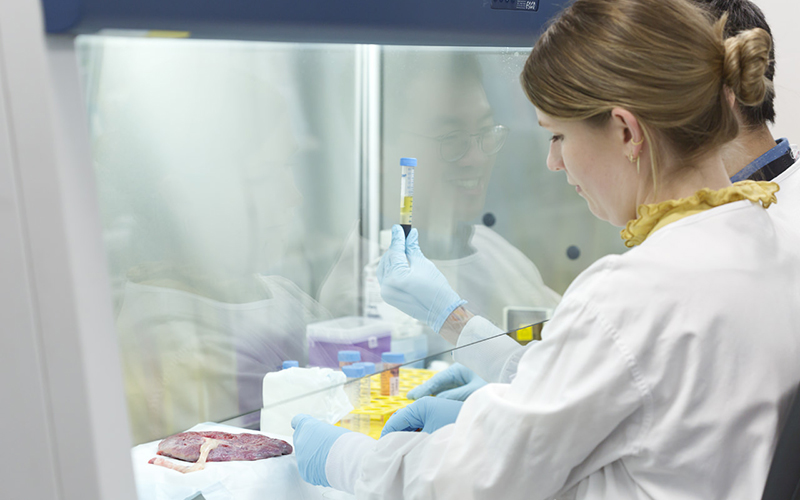
Four The Kids Research Institute Australia-based biobanks which underpin a range of cancer, respiratory and early life research have received more than $450,000 in funding.
Antibodies that target immune checkpoints such as cytotoxic T lymphocyte antigen 4 (CTLA‐4) and the programmed cell death protein 1/ligand 1 (PD-1/PD-L1) are now a treatment option for multiple cancer types. However, as a monotherapy, objective responses only occur in a minority of patients. Chemotherapy is widely used in combination with immune checkpoint blockade (ICB). Although a variety of isolated immunostimulatory effects have been reported for several classes of chemotherapeutics, it is unclear which chemotherapeutics provide the most benefit when combined with ICB.
With immune checkpoint therapy (ICT) having reshaped the treatment of many cancers, the next frontier is to identify and develop novel combination therapies to improve efficacy. Previously, we and others identified beneficial immunological effects of the vitamin A derivative tretinoin on anti-tumour immunity.
Cancer vaccination drives the generation of anti-tumor T cell immunity and can be enhanced by the inclusion of effective immune adjuvants such as type I interferons (IFNs). Whilst type I IFNs have been shown to promote cross-priming of T cells, the role of individual subtypes remains unclear. Here we systematically compared the capacity of distinct type I IFN subtypes to enhance T cell responses to a whole-cell vaccination strategy in a pre-clinical murine model.
Anaphylaxis is a severe, potentially life-threatening allergic reaction driven primarily by the activation of mast cells. We still fail to understand factors underlying reaction severity. Furthermore, there is currently no reliable diagnostic test to confirm anaphylaxis in the emergency department.
Medulloblastoma is the most common malignant paediatric brain tumour and a leading cause of cancer-related mortality and morbidity. Existing treatment protocols are aggressive in nature resulting in significant neurological, intellectual and physical disabilities for the children undergoing treatment. Thus, there is an urgent need for improved, targeted therapies that minimize these harmful side effects.
This report provides detailed characterization of carcinoma of unknown primary (CUP) in a young child and in the absence of defined therapeutic guidelines for pediatric CUP, the successful treatment strategy described should be considered for similar cases.
We report on the Australian experience of blinatumomab for treatment of 24 children with relapsed/refractory precursor B-cell acute lymphoblastic leukaemia (B-ALL) and high-risk genetics, resulting in a minimal residual disease (MRD) response rate of 58%, 2-year progression-free survival (PFS) of 39% and 2-year overall survival of 63%. In total, 83% (n = 20/24) proceeded to haematopoietic stem cell transplant, directly after blinatumomab (n = 12) or following additional salvage therapy (n = 8).
Medulloblastoma is the most common malignant childhood brain tumor, and 5-year overall survival rates are as low as 40% depending on molecular subtype, with new therapies critically important. As radiotherapy and chemotherapy act through the induction of DNA damage, the sensitization of cancer cells through the inhibition of DNA damage repair pathways is a potential therapeutic strategy.
Hereditary cancer predisposition syndromes (HCPS) account for at least 10% of paediatric cancers.1 Li‐Fraumeni syndrome (LFS) is a dominant HCPS caused by mutations in the TP53 gene and is associated with an 80–90% lifetime risk of cancer, commencing in infancy.2 Children of affected individuals are at 50% risk of inheriting the family mutation.