
Search
Effective social skills are essential for functional social support, help-seeking, and resource access. Digital social skills training plays a key role in empowering individuals to develop social competence, improve access to various support and resources, and enhance locus of control through dynamic media.
Children are particularly vulnerable to air pollution, but the effects of early life exposure to acute, high-intensity pollution on later lung function remain poorly understood. We assessed the association between prenatal or infant exposure to fire-related fine particulate matter (PM2.5) from a six-week coal mine fire and subsequent lung function.
In a sunny country such as Australia, it’s important to identify how to achieve the right amount of sun exposure for good health. We need to be able to harness the benefits of vitamin D and sunlight while remaining protected from the proven dangers of too much UV radiation.
With persistent challenges in determining the 'right' therapy or support for autistic children, there is a growing need for clinicians to integrate the preferences and priorities of clients and their families in their clinical decision making.

Discover more about Telethon Kids Institute research.
Measles is a highly contagious infectious disease that can cause severe, long-term complications in children.
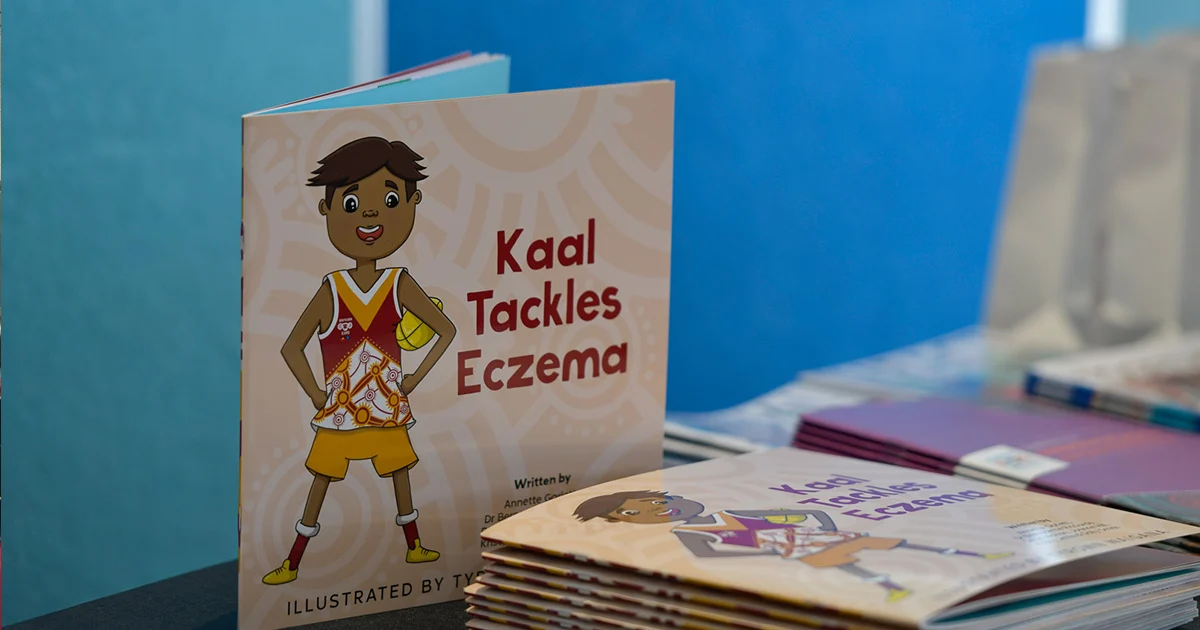
In close partnership with Aboriginal Elders and community members in Western Australia's south-west, we created ‘Kaal Tackles Eczema’, a children’s book to help Aboriginal families manage eczema. Our research showed a high prevalence and need for culturally relevant resources. The book uses Noongar language and art to educate and reduce infections, and is available online and in schools.
Food allergies have become more common in our community, with up to one in ten young children now affected. Reactions can range from mild hives to life threatening anaphylaxis and breathing difficulties. The most common food allergies are to egg, peanut, tree nuts, cow’s milk, fish, shellfish, sesame, wheat and soy.
This meta-analytic study examined the associations between childhood emotional abuse (CEA) history in adults and eleven emotion regulation abilities. Inclusion criteria were the use of validated and reliable multi-item measures, cross-sectional Pearson's correlation coefficient(s), and retrievable in English.
Although evidence supports clinicians to "safely do less" for febrile infants assessed as low risk of serious bacterial infection (SBI), early discharge may increase caregiver concern and reduce satisfaction with care. We captured the self-reported satisfaction and concerns for families enrolled in the study of fever, blood cultures and readiness for discharge in infants less than 3 months old (FeBRILe3), a prospective safety assessment of early discharge of low-risk febrile infants, to aid evaluation of this practice.