
Search
Asthma is among the commonest noncommunicable diseases of childhood and often occurs with other atopic comorbidities. A previous case-control study found evidence that compared to children who received acellular pertussis (aP) vaccines in early infancy, children who received one or more doses of whole-cell pertussis (wP) vaccine had lower risk of developing IgE-mediated food allergy. We hypothesized that wP vaccination in early infancy might protect against atopic asthma in childhood.
Children with Down syndrome (DS, trisomy 21) are at a significantly higher risk of developing acute leukemia compared to the overall population. Many studies investigating the link between trisomy 21 and leukemia initiation and progression have been conducted over the last two decades.

Australian parents have a new weapon in the battle to keep their kids safe online with the launch of ‘Beacon’.

As a paediatrician and researcher, I witness on a daily basis the extraordinary benefits of Western Australian health and medical research to individual patients and the community.
Despite significant decline in the past two decades, malaria is still a major public health concern in Tanzania; with over 93% of the population still at risk. Community knowledge, attitudes and practices, and beliefs are key in enhancing uptake and utilization of malaria control interventions, but there is a lack of information on their contribution to effective control of the disease.
Microbiome science has been one of the most exciting and rapidly evolving research fields in the past two decades. Breakthroughs in technologies including DNA sequencing have meant that the trillions of microbes (particularly bacteria) inhabiting human biological niches (particularly the gut) can be profiled and analysed in exquisite detail.
This study described the distribution of healthy body composition among Aboriginal adolescents in Australia aged 10-24 years and examined associations with health behaviours and self-rated health.
Athletes regularly perform resistance training, yet it is unknown how best to monitor its intensity. This study compared different resistance exercise intensity metrics to determine their sensitivity to manipulating work rate (via altering inter-set rest and load).
A lack of diversity in genomics for health continues to hinder equitable leadership and access to precision medicine approaches for underrepresented populations. To avoid perpetuating biases within the genomics workforce and genomic data collection practices, equity, diversity, and inclusion (EDI) must be addressed.
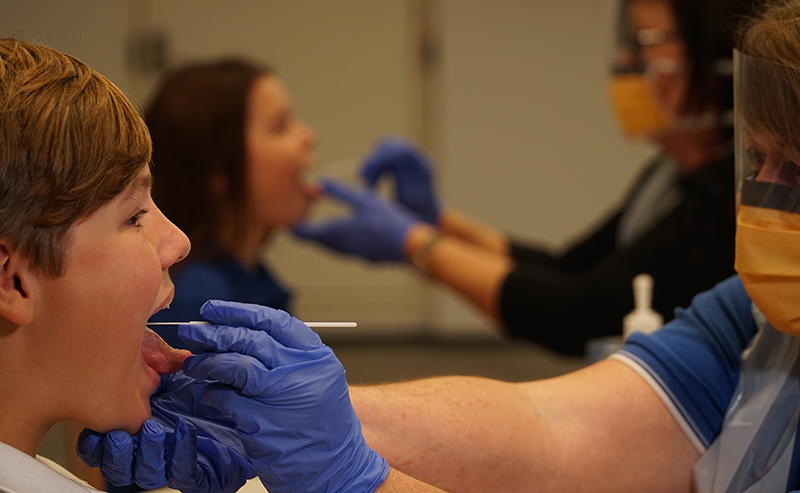
The DETECT Schools program is underway, with swabs taken at 13 of the participating schools across Western Australia. No asymptomatic COVID-19 has been detected to date.